---
title: Ice Cleats for Utilities | Winter Walking
description: Winter Walking provides traction solutions for utility crews working on icy substations, pole lines, valve sites, meter routes, and winter storm response terrain.
image: https://content.winterwalking.com/hubfs/Utility_work_does_202512161533.jpeg
---
[](https://www.winterwalking.com/)
We don't just make ice cleats, we make slips and falls disappear.®
SEARCH ICE CLEATS
- [Browse Ice Cleats](https://www.winterwalking.com/ice-cleats/)
- [All Ice Cleats](https://www.winterwalking.com/ice-cleats/)
- [Ice Cleat Categories](https://www.winterwalking.com/color-coded-categories/)
- [Walking Traction](https://www.winterwalking.com/walking-traction/)
- [Working Traction](https://www.winterwalking.com/working-traction/)
- [Transitional Traction](https://www.winterwalking.com/transitional-traction/)
- [About Us](https://www.winterwalking.com/about-us/)
- [Resources](https://www.winterwalking.com/slip-fall-tools/)
- [Slip Cost Calculator](https://calculator.winterwalking.com/)
- [Traction Test](https://traction.winterwalking.com/)
- [Product Training](https://content.winterwalking.com/training)
- [Blog](https://blog.winterwalking.com/)
- [Videos](https://content.winterwalking.com/videos-menu)
- [Guides](https://content.winterwalking.com/guides)
- [Get Started](https://www.winterwalking.com/get-started/)
- [Speak With A Product Specialist](https://content.winterwalking.com/product-specialist)
- [Become A Distributor](https://content.winterwalking.com/distributor)
- [Request A Quote](https://content.winterwalking.com/quote)
- [Download Catalog](https://content.winterwalking.com/request-catalog)
- [Contact Us](https://content.winterwalking.com/contact)
- [Browse Ice Cleats](https://www.winterwalking.com/ice-cleats/)
- [All Ice Cleats](https://www.winterwalking.com/ice-cleats/)
- [Ice Cleat Categories](https://www.winterwalking.com/color-coded-categories/)
- [Walking Traction](https://www.winterwalking.com/walking-traction/)
- [Working Traction](https://www.winterwalking.com/working-traction/)
- [Transitional Traction](https://www.winterwalking.com/transitional-traction/)
- [About Us](https://www.winterwalking.com/about-us/)
- [Resources](https://www.winterwalking.com/slip-fall-tools/)
- [Slip Cost Calculator](https://calculator.winterwalking.com/)
- [Traction Test](https://traction.winterwalking.com/)
- [Product Training](https://content.winterwalking.com/training)
- [Blog](https://blog.winterwalking.com/)
- [Videos](https://content.winterwalking.com/videos-menu)
- [Guides](https://content.winterwalking.com/guides)
- [Get Started](https://www.winterwalking.com/get-started/)
- [Speak With A Product Specialist](https://content.winterwalking.com/product-specialist)
- [Become A Distributor](https://content.winterwalking.com/distributor)
- [Request A Quote](https://content.winterwalking.com/quote)
- [Download Catalog](https://content.winterwalking.com/request-catalog)
- [Contact Us](https://content.winterwalking.com/contact)
# Ice Cleats for Utilities
Winter slip and fall prevention for Utilities
## Keep Utility Crews Safe on Icy Routes, Substations, and Winter Response Sites
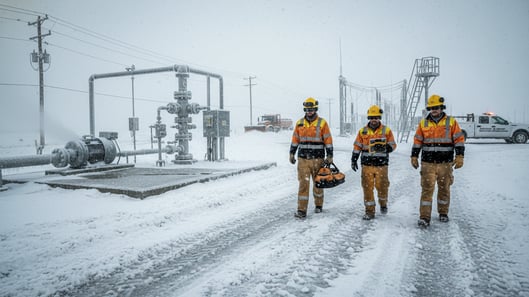
Utility work does not stop for snow and ice. Line crews, gas technicians, water and wastewater teams, meter readers, and emergency response staff operate outdoors in winter storms and refreeze cycles. They walk across icy gravel access roads, frozen jobsite shoulders, slick substation pads, metal stairways, and wet surfaces near valves and pumps that freeze hard overnight. These conditions increase fall risk at the exact time your crews need speed, stability, and zero downtime.
[](https://www.winterwalking.com/ice-cleats/)
A single slip can injure a skilled worker, delay restores, and impact critical service reliability. At Winter Walking, we do not just sell [ice cleats](https://www.winterwalking.com/ice-cleats/). We help utility providers deploy traction solutions that match real field conditions, keeping workers stable and ready for winter response.
---
### **Why Utility Providers Choose Winter Walking**
- **Built for Mixed Terrain and Infrastructure Surfaces**
Utility crews work on asphalt, gravel, compacted snow, icy grass, steel rungs, substation grating, and concrete pads. Our traction solutions are selected to grip across these changing surfaces without limiting mobility.
- **Supporting Storm Response and Service Continuity**
When winter storms hit, crews work long shifts restoring lines, fixing breaks, and preventing outages. Slip incidents reduce crew availability and slow emergency response. A traction program helps keep your workforce healthy and productive during peak winter demand.
- **Reliable Grip for Climbing and Elevated Access**
Line work, pole access, ladder climbing, and platform movement are common in utilities. Ice on steel steps and rungs increases risk dramatically. We help you choose traction gear that supports stable footing for climbing and elevated tasks.
- **Aligned with Safety KPIs and Regulatory Expectations**
Utilities track incident rates closely under OSHA, NERC, and internal contractor standards. A proactive traction strategy reduces winter slips and strengthens overall cold weather readiness.
### --- Do You Need Ice Cleats?
---
### **Key Utility Applications**
- Substations, switchyards, and transformer pad walkways in ice
- Pole line access and bucket truck staging on frozen ground
- Gas and water valve site inspections across icy routes
- Meter reading and service calls on snow packed property paths
- Storm response crews working roadside and remote terrain
- Utility yards, depots, and fleet parking zones
---
### **The Winter Walking Advantage**
- **Utility Specific Assessment:**
We review your crew routes, substations, service yards, and indoor to outdoor transitions to recommend traction solutions aligned with your hazards.
- **Versatile Product Range:**
Transitional cleats for quick vehicle to indoor moves and rugged outdoor cleats for remote right of way and storm work.
- **Durable for Daily Field Use:**
Built to handle grit, slush, refreeze cycles, and repeated on and off use across long shifts.
- **Trusted in Critical Infrastructure:**
Electric, gas, water, and wastewater utilities across North America rely on Winter Walking traction programs every winter season.
---
[](https://content.winterwalking.com/hs/cta/wi/redirect?encryptedPayload=AVxigLI0fcikAbEXCfFLRWPh1lMVTlDXCdu%2FanK0Rp6rXnb83Su81Uy1laLeT6D6zVVbVlk6ryn6yhYKKElrkx1Z5Q5KiU4iwiFE6aAC8Nt1VscAsdWLi%2BhOMhedrZaaMh0Ex0t8WOLjv4h85ygehToHT8GQXdYVOHGh4bjpyrcvBREzuVgKZRS57vedHlQVA4c7e8aonI40%2FYQvw0s3hTEs7RG1MBY7o456&webInteractiveContentId=201671012695&portalId=3833245&hsLang=en)
#### Winter Walking Safety Resources
[**Choose the Right Ice Cleats for your crew →**](https://traction.winterwalking.com/) [**Estimate Your Winter Slip-and-Fall Exposure →**](https://calculator.winterwalking.com/) [**View Our Catalog →**](https://content.winterwalking.com/request-catalog?hsLang=en) [**View Our Entire Line of Ice Cleats →**](https://www.winterwalking.com/ice-cleats/) [**Winter Safety Articles →**](https://blog.winterwalking.com/?hsLang=en)[**Winter Safety Videos →**](https://content.winterwalking.com/videos-menu?hsLang=en)
#### Winter Walking
400 Babylon Road
Horsham, PA 19044
p: [1-888-NO-SLIPS (667-5477)](tel:1-888-667-5477)
f: 1-215-441-9642
All content copyright 2026. Winter Walking. Do not reuse or reproduce without permission.
```json
{
"@context" : "https://schema.org",
"@type" : "VideoObject",
"caption" : {
"@type" : "MediaObject",
"contentUrl" : "https://content.winterwalking.com/media-transcripts/196671725873/en.vtt",
"inLanguage" : "en",
"name" : "en Captions"
},
"contentUrl" : "https://3833245.fs1.hubspotusercontent-na1.net/hubfs/3833245/Video%20Ads/color-coded-traction---winter-walking-ice-cleats.mov",
"dateModified" : "2025-12-04T15:12:49.344Z",
"duration" : "PT35.869S",
"height" : 1080,
"name" : "Color Coded Traction - Winter Walking Ice Cleats",
"thumbnailUrl" : "https://content.winterwalking.com/hubfs/Video%20Ads/color-coded-traction---winter-walking-ice-cleats.mov/medium.jpg",
"uploadDate" : "2025-09-26T12:49:07.956Z",
"width" : 1920
}
```