
Protect Railway Crews on Icy Yards, Platforms, and Trackside Routes
Rail operations continue through harsh winter conditions where ice forms on ballast, platforms, walkways, and steel surfaces faster than many crews can respond. Yard teams, track inspectors, signal crews, and maintenance staff work on frozen ties, icy rail beds, slick metal steps, and snow packed service roads. Train crews and station personnel also face slippery passenger platforms, stairs, parking lots, and access ramps.
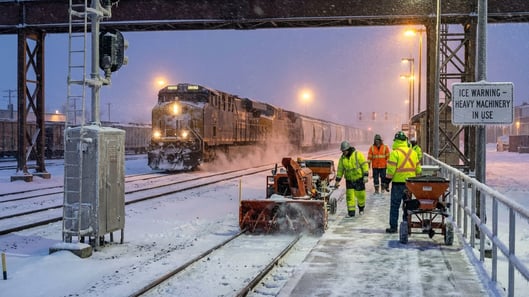
A single slip can cause injury, delay repairs, interrupt switching operations, and increase operational risk. At Winter Walking, we do not just sell ice cleats. We help railroads and rail contractors deploy traction solutions that match real railway environments, keeping crews stable and schedules moving safely through winter.
Why Railroads Choose Winter Walking:
- Built for Trackside and Yard Terrain
Rail sites include ballast, timber and concrete ties, steel grating, icy service roads, and uneven yard surfaces. Our traction solutions are chosen to grip on mixed railway terrain without reducing mobility. - Supporting Switching, Inspection, and Maintenance Uptime
Winter does not stop switching operations, inspections, or signal maintenance. Slip incidents remove experienced workers from the field and slow critical tasks. A traction program reduces winter disruptions so your operations stay on schedule. - Reliable Grip for Climbing and Steel Access Points
Rail crews climb ladders, steps, locomotives, rail cars, and elevated maintenance platforms. Ice on steel increases risk dramatically. We help you select traction that supports safe footing on steel rungs and platform transitions. - Aligned with FRA, OSHA, and Contractor Safety Metrics
Railroads track incident rates and compliance under FRA expectations and internal safety KPIs. Proactive winter traction reduces recordables and strengthens cold weather preparedness across both employees and contractors.
